
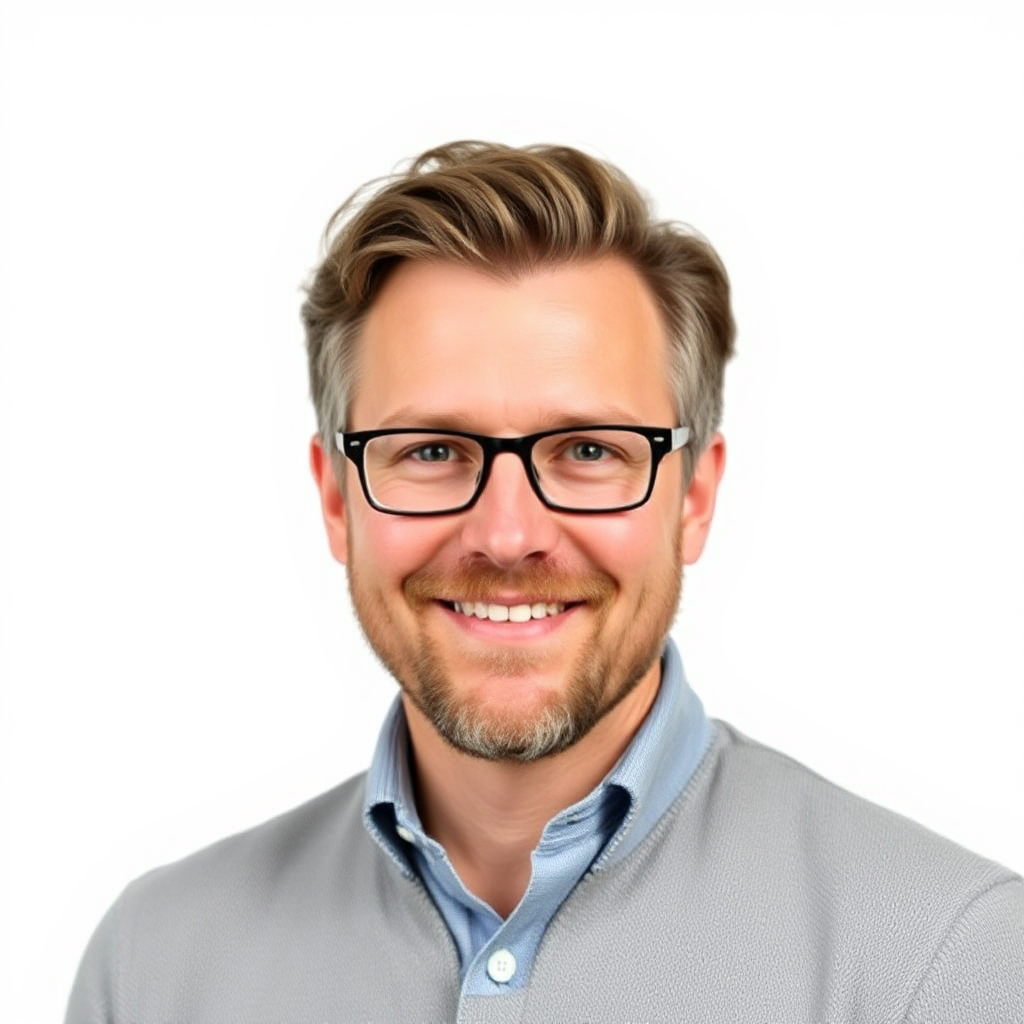
The deceased US second-in-command Dick Cheney, who passed away at age 84, was considered among the most significant holders of the vice-presidency in the nation's history. Whereas numerous VPs had to settle for minor or symbolic positions, Cheney held huge influence during the presidency of George W Bush, to the point that he was commonly described as the "actual president".
Bush disliked such a characterisation and said the relationship was more complex. He noted that Cheney was deferential, always addressing him in public settings as President, while he called him as Dick. Bush disputed even descriptions of their relationship as a partnership because it implied that they were on equal footing. In spite of these denials, Cheney found the relaxed president accommodating on a broad range of policy decisions.
The Post-9/11 Era
In charge of a contingent of neo-conservatives that included defence secretary Donald Rumsfeld and Pentagon second-in-command Paul Wolfowitz, he vigorously promoted the invasion of Iraq in 2003 in reaction to the 9/11 attacks on New York and Washington. During of the 9/11 attack, Bush had been attending a gathering at a school in Florida. While Bush headed for a underground facility in Nebraska, Cheney assumed control, ordering the downing of any unidentified aircraft nearing the Capitol building.
Cheney claimed the assaults changed him, making him become focused on retaliation. Together with other conservative figures, including Rumsfeld and Wolfowitz, he advocated for a takeover of Afghanistan in an attempt to seize Osama bin Laden. Cheney then vigorously pushed for the military action of Iraq, though there was no evidence of Saddam Hussein playing a role.
Debated Policies
He voiced no apologies about the invasion, in which an estimated 100,000 Iraqis died, and not about the harsh treatment of suspects captured after 9/11. He told CNN in 2015 that the Iraq military action, which was founded on inaccurate information repeated by Cheney, was the proper decision. "It was the correct action to do at that time. I had faith at the time and I maintain that stance now."
But even then, there were contrary opinions at a high level about the botched execution of Iraq. One of the administration's own representatives to the region, General Anthony Zinni (2001-03), was dismissed from the post. "I observed, as a baseline," he subsequently stated "obvious failure, negligence, and irresponsibility: at worst, deception, ineptitude, and dishonesty."
Wider Perspective
Cheney was not completely responsible for the Iraq invasion. Even before 9/11, Wolfowitz had advocated for such action. He had written a memorandum setting out circumstances in which US concerns might be compromised (encompassing "obtaining vital raw materials, primarily Persian Gulf oil"). Wolfowitz had contended that "the United States should be prepared to operate alone when joint efforts prove impossible," explicitly citing armed actions against Iraq.
Bush too had assumed the presidency generally inclined on executing what his father had famously refused to do in 1991; overthrow Saddam. Following he had been sacked by the president, the finance chief Paul O'Neill revealed how, at the initial gathering of the National Security Council in January 2001, Bush had declared his objective of lowering America's participation in the Israeli-Palestinian conflict and proposed military action against Iraq.
Bush held a private grievance against Saddam, convinced he had been behind a conspiracy to assassinate his father, President George HW Bush, on a trip to Kuwait in 1993. He furthermore disliked that one of the largest hotels in Baghdad had a ground design with a portrait of his parent's countenance that all visitors had to tread upon.
Interrogation Methods
But it was Cheney who was among the most outspoken behind attacking Iraq, repeatedly quoting agency briefings that were whether thin or entirely misleading. He supported what the Bush administration politely called as "advanced techniques", the employment of simulated drowning and torture.
Responding to a Senate analysis in 2014 that found that no valuable data had come from the harsh techniques, Cheney disregarded the findings as "riddled with crap". He informed Fox News: "We instructed [the CIA] to establish protocols and put in place procedures to apprehend the individuals who killed 3,000 of us on 9/11 and guarantee it never happened again. That was specifically what they did and they earn a lot of praise."
Public Image
Cheney took pleasure in nicknames imposed on him by detractors such as Darth Vader and The Prince of Darkness, and by the notion that he was a shadow power directing Bush. In Peter Baker's 2013 publication about the two, Days of Fire: Bush and Cheney in the White House, Cheney is reported as stating: "Do I represent the evil genius in the shadows that nobody ever sees leave his domain? It's a nice way to function, actually."
Commercial Ties
Controversy over his corporate affiliations pursued him during his tenure as vice-president. While he had minimal expertise in corporate affairs but good contacts in military, particularly in Saudi Arabia, he was asked to become part of Halliburton, one of the world's most substantial petroleum conglomerates, in 1995 as chairman and chief executive.
In 2000 he was selected as Bush's running mate for the executive branch. Contentiously, during the military campaign, Halliburton was awarded US contracts worth substantial sums.
It significantly boosted his finances. His yearly compensation during his tenure at the company grew from his quarter-million dollars when he was defence secretary to over four million. When he left in 2000 he had a severance arrangement valued at over $20m|twenty

